Description
PTO Overrunning Clutch | Freewheel Clutch for Agricultural Driveline
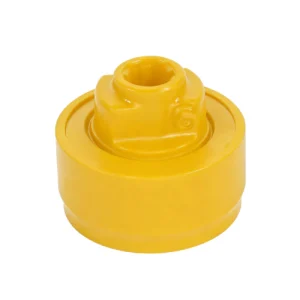
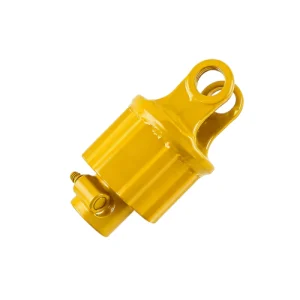
The PTO Overrunning Clutch — commonly referred to as a freewheel clutch, one-way bearing clutch, or sprag clutch for PTO shafts — is an indispensable safety component in modern agricultural drivelines. It allows the implement to coast freely when the tractor decelerates or the PTO is disengaged, preventing momentum-driven back-torque from damaging the tractor transmission, PTO gearbox, and universal joints. Widely adopted for mower-conditioners, round balers, forage harvesters, and other high-inertia implements, our overrunning clutch series covers torque ratings from 2,400 Nm up to 3,500 Nm, accommodating both standard and heavy-duty PTO applications.
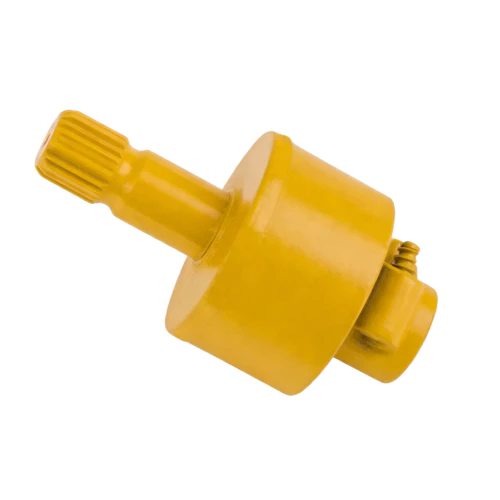
Technical Specifications — RA1 Series (2400 Nm)
| Series | Max Torque (Nm) | Spline | A (mm) | B (mm) |
|---|---|---|---|---|
| 1RA1 | 2400 | 1 3/8"Z6 | 138 | 21 |
| 2RA1 | 138 | |||
| 3RA1 | 149 | |||
| 4RA1 | 150 | |||
| 5RA1 | 154 | |||
| 6RA1 | 160 | |||
| 7RA1 | 171 | |||
| 7NRA1 | 157 | |||
| 8RA1 | 2400 | 1 3/8"Z6 | 171 | 21 |
| RAS1 | 2400 | 1 3/8"Z6 (F) / 1 3/8"Z6 (M) | 142 | 21 |
Technical Specifications — RA2 Series (3500 Nm)
| Series | Max Torque (Nm) | Spline | A (mm) | B (mm) |
|---|---|---|---|---|
| 5RA2 | 3500 | 1 3/8"Z6 | 172 | 21 |
| 6RA2 | 178 | |||
| 7NRA2 | 175 | |||
| 6RA2 | 178 | |||
| 8RA2 | 189 | |||
| RAS2 | 3500 | 1 3/8"Z6 (F) / 1 3/8"Z6 (M) | 161 | 21 |
Component list (RA series): Circlip, Retaining washer, Push pin kit, Hub, Prong kit (Qty.=3), Housing with yoke, Grease nipple.
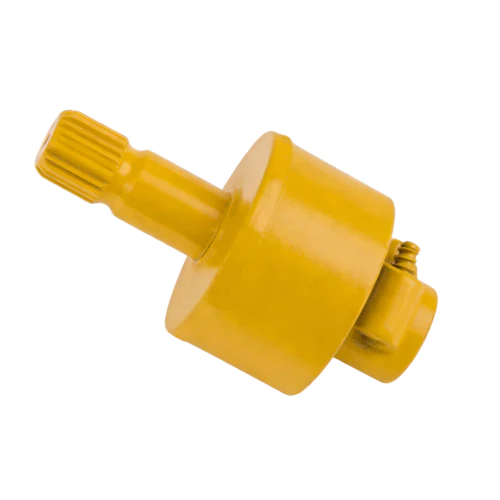
Component list (RAS series): Circlip, Retaining washer, Push pin kit, Hub, Prong kit (Qty.=3), Housing with splined shaft, Grease nipple.
Standout Benefits
Decouples the implement from the PTO when momentum exceeds tractor drive speed, eliminating damaging reverse loads on transmission and u-joints.
Spring-loaded prongs engage and disengage automatically — no operator intervention needed during normal use.
Prong kits can be replaced without special tooling, keeping maintenance simple and affordable.
Up to 3,500 Nm covers demanding applications including large round balers and forage choppers.
Available with yoke output (RA) or splined shaft output (RAS) for flexible integration into any driveline layout.
Heat-treated prong mechanisms and precision-ground hubs deliver consistent one-way engagement for thousands of operating hours.
Operating Principle
Inside the overrunning clutch, a set of spring-loaded prongs (typically three) are seated within the hub and interface with ratchet-style pockets machined into the outer housing. When the tractor PTO drives the implement, the prongs lock into the pockets and transmit torque in the drive direction. The moment the implement attempts to over-run the tractor — for example, when coasting downhill or when the PTO is disengaged while the cutter drum still spins — the prongs retract against their springs, allowing the outer housing to rotate freely relative to the hub. This one-way engagement prevents destructive back-torque from reaching the tractor’s PTO shaft and transmission.
Where It’s Used
Heavy cutter bars carry significant rotational inertia. The freewheel clutch prevents this energy from feeding backward into the PTO when the operator stops.
Baler flywheels and feed rollers store kinetic energy. An overrunning clutch is essential to avoid PTO wind-back during disengagement.
High-speed chopper drums need safe, controlled coast-down. The freewheel ensures no reverse load reaches the tractor.
Soil resistance varies dramatically; the overrunning clutch absorbs deceleration spikes when tilling heavy clay or hitting rock.
Torque Limiter Type Comparison
| Attribute | Ball Detent | Friction Disc | Shear Pin | Overrunning (Freewheel) |
|---|---|---|---|---|
| Torque Capacity | 570 – 3200 Nm | 800 – 3000 Nm | 570 – 4500 Nm | 2400 – 3500 Nm |
| Rotation | Bi-directional lock | Bi-directional slip | Bi-directional lock | One-direction only |
| Re-engagement | Automatic | Continuous | Manual bolt swap | Automatic freewheel |
| Ideal For | Shock overload | Gradual overload | Severe overload | Inertia-driven implements |
Installation Guidance
- Verify the correct rotational direction — freewheel clutches are directional; an arrow on the housing indicates the drive direction.
- Slide the splined hub onto the PTO shaft and secure with the retaining washer and circlip.
- Attach the yoke (RA) or splined output shaft (RAS) to the implement input flange using push pins.
- Grease the unit generously through the nipple before first operation.
- Test the freewheel action by hand: rotate the housing in the non-drive direction — it should spin freely with a clicking sound.
Warning: Never operate the overrunning clutch in reverse of its intended direction — this will lock the implement and negate the freewheel function.
Selection Advice
Evaluate the implement’s rotational inertia and peak operating torque to select the appropriate RA1 (2400 Nm) or RA2 (3500 Nm) model. For implements with external input shafts requiring a splined connection, choose the RAS variant. The “A” dimension must be verified against your profile tube length. If you also require overload protection, pair the overrunning clutch with a shear bolt or friction torque limiter in the same driveline for comprehensive safety.
Quality & Warranty
Manufactured to ISO 9001:2015 standards with CE certification. Each batch is tested for engagement torque, freewheel smoothness, and spline concentricity. A 12-month factory warranty covers material and manufacturing defects, backed by readily available prong kits and replacement parts shipped globally.
FAQ
What happens if I install the clutch in the wrong direction?
The freewheel function will be reversed — the clutch will lock during coast-down and freewheel during drive. This is dangerous. Always confirm the directional arrow before installation.
Can I use an overrunning clutch on a PTO-driven pump?
PTO-driven hydraulic pumps rarely generate back-torque because they have low inertia. An overrunning clutch is typically unnecessary for pumps but is essential for high-inertia implements.
How do I know when the prongs need replacement?
A worn prong kit manifests as intermittent slipping under load or a grinding noise. Inspect prongs annually — if the engagement faces are rounded or cracked, replace the full kit of 3.
Is this compatible with both 540 and 1000 RPM PTO?
Yes, both spline sizes use the same 1 3/8" Z6 profile common to 540 RPM PTO. For 1000 RPM systems (1 3/8" Z21 or 1 3/4" Z20), consult our catalogue for compatible adapters.
What grease should I use?
Use NLGI #2 lithium-based EP grease. Apply every 8 operating hours or before each seasonal start-up for maximum component life.
Global User Feedback
“Essential for our large-scale hay operation. The RA2 handles the inertia of our triple mower-conditioners without a hiccup.”
“Fitted a 6RA1 on our Welger baler two seasons ago. Smooth freewheel action and zero issues. Highly recommended.”
“Our forage harvester demands reliable coast-down protection. The RAS2 delivers exactly that — quiet, smooth, and dependable.”
“Build quality is superb. The precision-machined prongs engage cleanly every time, even after hundreds of hours.”
“We run five RA1 units across our operation. Parts availability and pricing make these the best value freewheel clutches on the market.”
Complementary Products
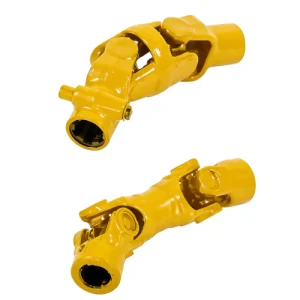
Pair your overrunning clutch with our full driveline catalog: PTO shafts, torque limiters (shear bolt, friction, ratchet, automatic), wide-angle joints, SD-double joints, yokes, safety shields, and adapters. Every component is engineered for interchangeability and proven in the field.