Description
Ratchet Torque Limiter for PTO Shaft | Pawl-Type Overload Safety Clutch
The Ratchet Torque Limiter — also designated a pawl clutch, spring-loaded ratchet clutch, or automatic-reset PTO safety coupling — provides repeatable, self-resetting overload protection for agricultural PTO drivelines. Unlike shear-bolt devices that require manual bolt replacement after each trip event, the ratchet torque limiter uses a ring of spring-loaded pawls that disengage under excessive torque and automatically re-engage once the overload subsides. Available across five torque tiers (400 Nm to 2,000 Nm), it is the preferred choice for implements that experience frequent, short-duration shock loads.
Technical Specifications — SA1 & SAS1 (400 Nm)
| शृंखला | Setting Torque (Nm) | Spline | ए (मिमी) | बी (मिमी) |
|---|---|---|---|---|
| 1SA1 | 400 | 1 3/8"Z6 | 138 | 21 |
| 2SA1 | 138 | |||
| 3SA1 | 149 | |||
| 4SA1 | 150 | |||
| SAS1 | 400 | 1 3/8"Z6 (F/M) | 144 | 21 |
Technical Specifications — SA2 & SAS2 (800 Nm)
| शृंखला | Setting Torque (Nm) | Spline | ए (मिमी) | बी (मिमी) |
|---|---|---|---|---|
| 1SA2 | 800 | 1 3/8"Z6 | 156 | 21 |
| 2SA2 | 156 | |||
| 3SA2 | 167 | |||
| 4SA2 | 168 | |||
| 5SA2 | 172 | |||
| 6SA2 | 178 | |||
| 7SA2 | 189 | |||
| 7NSA2 | 175 | |||
| 8SA2 | 189 | |||
| SAS2 | 800 | 1 3/8"Z6 (F/M) | 161 | 21 |
SA3/SAS3 (1200 Nm), SA4/SAS4 (1600 Nm), SA5/SAS5 (2000 Nm)
| शृंखला | Torque (Nm) | Spline | ए (मिमी) | बी (मिमी) | Pawl Qty. |
|---|---|---|---|---|---|
| 2SA3 – 8SA3 / 7NSA3 | 1200 | 1 3/8"Z6 | 171 – 204 | 22 | 24 |
| SAS3 | 1200 | 1 3/8"Z6 (F/M) | 164.5 | 22 | 24 |
| 5SA4 / 6SA4 | 1600 | 1 3/8"Z6 | 206 / 212 | 22 | 32 |
| SAS4 | 1600 | 1 3/8"Z6 (F/M) | 186 | 22 | 32 |
| 6SA5 | 2000 | 1 3/8"Z6 | 231 | 22 | 40 |
| SAS5 | 2000 | 1 3/8"Z6 (F/M) | 205 | 22 | 40 |
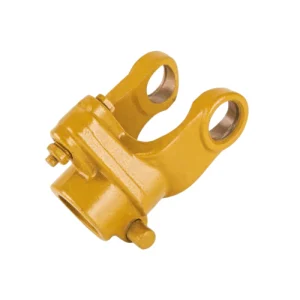
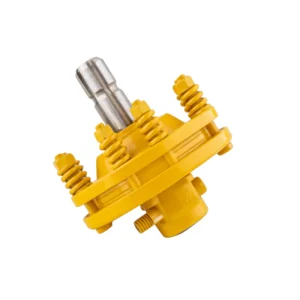
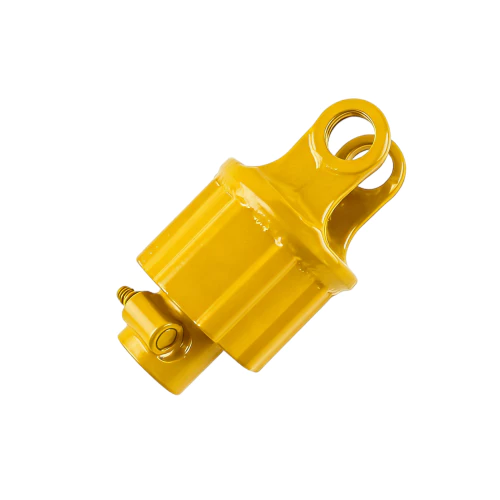
Components: Circlip, Retaining washer, Dust guard ring, Push pin kit, Hub, Pawl kit, Housing with yoke, Grease nipple. SAS variants include a housing with splined shaft instead of yoke, plus a ball collar kit (SA3+).
Principal Advantages
Spring-loaded pawls re-seat automatically once the overload clears, enabling instant resumption of work with zero downtime.
From 8 pawls at 400 Nm to 40 pawls at 2000 Nm, each model is tuned for optimal torque transfer and smooth disengagement.
Unlike shear bolts, nothing breaks during a trip event — pawls disengage and re-engage indefinitely.
Integrated dust guard ring shields internal pawl mechanisms from dirt, chaff, and moisture ingress.
SA series with yoke output for cross-journal connections; SAS series with splined shaft for direct spline-to-spline coupling.
Factory-calibrated spring tension ensures consistent, repeatable torque release within tight tolerances.
Working Principle
The ratchet torque limiter employs a circumferential array of hardened pawls, each seated in a pocket within the hub and pressed outward by a dedicated compression spring. Under normal operating torque, the pawl tips engage corresponding ratchet teeth on the inner surface of the outer housing, locking input and output together. When an overload condition causes the transmitted torque to exceed the combined holding force of all pawl springs, the pawls are pushed inward against their springs, and the hub “clicks” past the ratchet teeth. As soon as the overload subsides, the springs push the pawls back into the teeth and the drive reconnects — all within a fraction of a second. This self-resetting mechanism is ideal for applications with repetitive, transient shock loads.
Agricultural Applications
Momentary jams from clogged seed tubes create brief torque spikes; the ratchet limiter clicks through without stopping the drill.
Frozen or tangled material can stall the auger momentarily. Ratchet protection prevents gearbox damage while the mixer self-clears.
Debris entering the impeller causes intermittent spikes; the auto-reset eliminates manual intervention.
Torque Limiter Comparison Matrix
| Characteristic | Ball Detent | Friction Disc | Shear Pin | Ratchet (Pawl) |
|---|---|---|---|---|
| Torque Range | 570 – 3200 Nm | 800 – 3000 Nm | 570 – 4500 Nm | 400 – 2000 Nm |
| Operating Speed | 540 / 1000 RPM | 540 / 1000 RPM | 540 / 1000 RPM | 540 / 1000 RPM |
| Reset | Auto | Continuous slip | Manual | Auto (pawl re-seat) |
| Best Fit | Moderate shock | Steady overload | Severe single event | Frequent light shocks |
Mounting Steps
- Confirm the spline (1 3/8" Z6) and torque tier (SA1 through SA5) match your application.
- Install the hub onto the PTO profile tube; secure with the circlip and retaining washer.
- Fit the dust guard ring over the joint to keep debris out of the pawl mechanism.
- Attach the yoke housing (or SAS splined housing) to the implement input using the push pin kit.
- Lubricate through the grease nipple with NLGI #2 EP grease.
- Hand-rotate the unit to verify smooth pawl engagement and clicking release.
Caution: Do not exceed the rated torque tier. Sustained operation above the setting torque will cause excessive heat build-up in the pawl springs, reducing their service life.
How to Choose the Right Model
Identify the nominal operating torque of your implement and select a ratchet limiter tier that sits roughly 25–40 % above that value. If the implement regularly encounters hard shock loads (e.g., rock impact on a tiller), move up one tier for additional margin. For implements requiring a splined output connection rather than a yoke, choose the corresponding SAS variant. Verify the overall “A” dimension fits your available driveline space. Contact our engineering team if your application falls between standard torque tiers.
Certifications & Commitment
Every ratchet torque limiter is produced under आईएसओ 9001:2015 quality management and bears CE marking. Pawl hardness, spring force, and engagement geometry are 100 % inspected. We provide a 12-month warranty and stock replacement pawl kits for rapid global delivery.
Common Questions
Will the ratchet limiter slip continuously under steady overload?
Yes — if a sustained overload persists, the pawls will ratchet continuously, producing a rapid clicking sound. This protects the driveline but generates heat; stop and clear the obstruction promptly.
Can I adjust the trip torque in the field?
The trip torque is factory-set by the spring pre-load and pawl count. Field adjustment is not recommended; select the correct model for your application instead.
How does noise level compare to friction clutches?
Ratchet limiters produce an audible clicking sound during a slip event, which is actually an advantage — it clearly alerts the operator that an overload is occurring.
What maintenance is required?
Regular greasing (every 8 hours) and annual inspection of pawl faces for wear. Replace the full pawl kit if engagement surfaces show rounding or pitting.
Is it compatible with both SA and SAS shafts?
SA and SAS are the same ratchet mechanism in different housings. SA uses a yoke output; SAS uses a splined shaft output with female/male spline. Both share the same internal torque rating.
What Our Customers Say
“The SA2 on our air seeder clicks through root tangles without missing a beat. No more stopping to change shear bolts every pass.”
“Switched from shear bolts to ratchet limiters three years ago. Productivity is up because we never stop for bolt changes.”
“German-level precision from a surprisingly affordable source. The SA3 runs our feed mixer flawlessly.”
“Handling mesquite brush is tough on PTO shafts. The ratchet limiter protects my cutter and resets itself. Game changer.”
“Reliable and well-built. The SAS4 on our grain auger shrugged off multiple jam events this harvest without damage.”
Browse Our Full PTO Range
Need more than overload protection? We offer complete पीटीओ ड्राइव शाफ्ट, yokes, safety shields, cross journals, adapters, and couplers. Pair ratchet limiters with our overrunning clutches for dual-protection drivelines.