
High-Performance PTO Shaft for Rotary Tiller Applications
The rotary tiller relies on a consistent flow of rotational energy from the tractor’s PTO output to drive its working mechanisms. Our purpose-built PTO shaft for rotary tiller is designed to meet the demanding torque profiles and operational rhythms of soil tillage and seedbed preparation. Built for Australian conditions and available through ptoparts.top, this shaft delivers dependable performance from paddock to paddock.
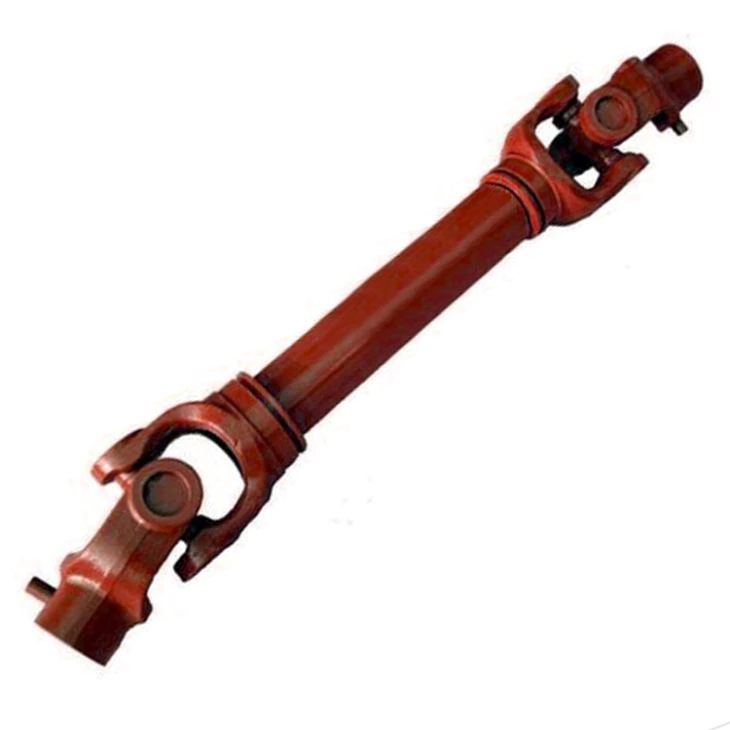
Technical Specifications – Rotary Tiller PTO Shaft
| Parameter | Spezifikation / Anpassbarer Bereich |
|---|---|
| Anwendung | Rotary Tiller |
| Empfohlene Traktorleistung | 60–180 PS |
| Zapfwellendrehzahl | 1000 rpm |
| Maximales Dauerdrehmoment | 400–1200 Nm |
| Maximales Drehmoment | 1800 Nm |
| Schaftserie | T4 / L4 (Mittelschwere bis schwere Beanspruchung) / T5 / L5 (Schwere Beanspruchung) / T6 / L6 (Extrem schwere Beanspruchung) |
| Betriebstemperaturbereich | -30°C to +100°C |
| U-Joint Bearing Type | Greased needle roller |
| Rohrprofil | Triangular profile or Star profile |
| Optionen für die Jochaufnahme am Traktorende | Splined yoke (1-3/4″ 20-spline) / Flange yoke |
| Überlastschutzoptionen | Free-wheel overrunning clutch / Shear bolt torque limiter / Ratchet torque limiter |
| Dynamisches Gleichgewicht | Factory balanced |
| Maximaler Betriebswinkel | 25° |
| Außendurchmesser des Rohres | 65 mm |
| Kreuzgelenkgröße | 36×89 mm / 38×105 mm / 27×74.5 mm |
| Tube Wall Thickness | 4.0 mm |
| Implement-End Yoke Options | Flange yoke / Splined yoke (1-3/8″ 6-spline) |
| Empfohlenes Schmiermittel | EP2 lithium-complex |
| Surface Treatment | Hot-dip galvanised |
| Yoke Material | Forged alloy steel (42CrMo) |
Working Principle of the Rotary Tiller PTO Shaft
At its core, the PTO shaft is a torque conduit. It begins at the tractor’s PTO output—a splined stub rotating at a governed speed—and terminates at the rotary tiller’s input flange or spline. Between these two endpoints, the shaft must compensate for three-dimensional movement: fore-aft telescoping, vertical angularity, and lateral offset.
Two Cardan-type universal joints provide the angular flexibility, while the lemon, star, or triangular profile tube slides within its mating tube to manage length changes. In the context of soil tillage and seedbed preparation, this means the shaft continuously adapts as the tractor turns, undulates over terrain, or lifts the implement on its three-point hitch.
The rotary tiller receives this rotational input through a gearbox or directly to its functional mechanism. The PTO shaft’s torque limiter acts as a mechanical fuse—if the implement encounters an immovable obstruction, the limiter disengages or absorbs the shock before damage can propagate to the tractor’s drivetrain.

Core Advantages of Our PTO Shaft for Rotary Tiller
⚙ Alloy Steel Construction
Our rotary tiller PTO shaft uses high-grade alloy steel tubing and forged yokes, offering up to 40% longer service life than economy alternatives.
🔨 Quick-Fit Yoke Options
Choose from quick-release, plain bore, or splined yokes for rapid implement changeover—no tools required in most configurations.
🔒 Multi-Stage Protection
Select from shear bolt, friction clutch, or free-wheel overrunning clutch protection to match your specific operational risk profile.
⚖ Low-Maintenance Bearings
Sealed needle-roller bearings in every U-joint eliminate frequent greasing while maintaining smooth, low-friction rotation under heavy loads.
🛠 Custom Length Options
Available in standard and custom closed lengths, our shafts fit virtually any tractor-to-implement spacing without modification.
🌍 Australian-Tested
Every shaft design is validated under Australian field conditions—heat, dust, and long operating hours—before release to market.
Leitfaden zur Kompatibilität und Passform von Ersatzteilen
This PTO shaft is engineered to replace OEM and aftermarket drivelines fitted to rotary tiller equipment from PTOline, GKN Walterscheid, AgriCardan, Benzi & Di Terlizzi, Profile Connect, EurocardanUnter anderem kann unser technisches Team Ihre bestehende Teilenummer abgleichen, um eine genaue Übereinstimmung sicherzustellen.
⚠ Die oben genannten Markennamen dienen ausschließlich dazu, Kunden bei der Identifizierung kompatibler Ersatzteile zu unterstützen. Es besteht keine Verbindung zu den genannten Marken und es wird keine Empfehlung durch diese ausgesprochen. Alle Markenrechte gehören den jeweiligen Inhabern.
Einzelkomponenten & Ersatzteile
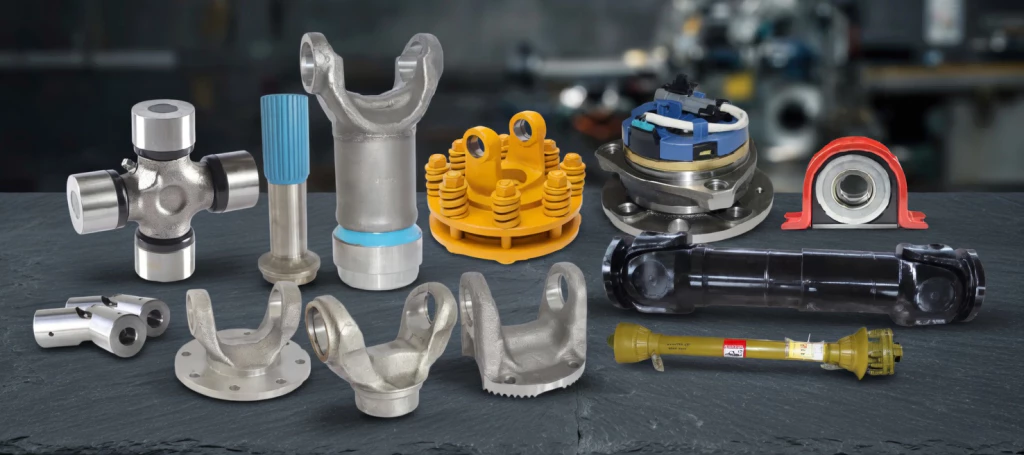
Wir liefern alle Zapfwellenkomponenten separat – Kreuzsätze, Jochbaugruppen, Innen- und Außenrohre, Schutzsätze, Kupplungsbaugruppen, Scherbolzen und Befestigungsmaterial –, sodass Sie Ihre Welle nach Bedarf überholen oder umkonfigurieren können, ohne eine komplette Ersatzwelle kaufen zu müssen.
Einhaltung gesetzlicher Bestimmungen und regionale Informationen
Arbeitsschutz und Sicherheit (WHS)
In Australia, PTO shaft guarding is mandated under the model Work Health and Safety Regulations. Every PTO shaft we supply for rotary tiller use includes a full-length safety guard assembly, meeting the requirements outlined in the Managing the Risks of Plant in the Workplace Code of Practice.
Internationale Standards
Unsere Produkte werden gemäß ISO 5673-1 und ISO 5673-2 für die Abmessungen und Schutzvorrichtungen von Nebenabtriebswellen gefertigt. Die Kreuzgelenke entsprechen der DIN 71752 hinsichtlich der Toleranzen für Kreuzgelenke und Lagerschalen.
Import & Zoll
Zapfwellen und zugehörige Komponenten fallen unter die australische Zolltarifnummer 8483 (Getriebewellen und Kurbelwellen; Lagergehäuse; Zahnräder und Getriebe). Zölle und Mehrwertsteuer werden bei der Einfuhr fällig. Wir übernehmen die gesamte Zollabwicklung für Lieferungen nach Australien.
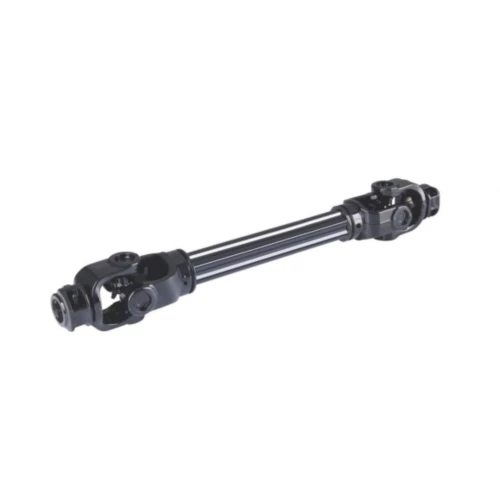
PTO Shaft Selection Guide – Rotary Tiller
Selecting the right PTO shaft for your rotary tiller is straightforward when you follow this step-by-step guide. Gather the information below before placing your order.
| Step | Action | Details for Rotary Tiller |
|---|---|---|
| 1 | Identify tractor PTO HP | Typical: 60–180 HP for this application |
| 2 | Confirm PTO speed setting | 540 rpm or 1000 rpm (check implement manual) |
| 3 | Measure closed length (Lmin) | 800–1300 mm |
| 4 | Count tractor PTO splines | 6-spline (1-3/8") or 6-spline (1-3/4") most common |
| 5 | Check implement input connection | Splined, keyed, or flanged input |
| 6 | Calculate torque requirement | 400–1200 Nm |
| 7 | Select shaft series | T4 / L4 (Medium-heavy duty) or T5 / L5 (Heavy duty) |
| 8 | Choose overload protection | Friction clutch recommended for rotary tiller |
📌 Need help? Kontaktieren Sie uns for expert guidance.
Targeted Installation Procedure – Rotary Tiller PTO Shaft
⚠ Safety First: Disengage the PTO, switch off the engine, remove the ignition key, and allow all moving parts to come to a complete stop before working on the driveline. Wear appropriate PPE including close-fitting clothing and gloves.
Phase 1: Preparation
Lay out all shaft components and cross-reference against the packing list. Confirm the shaft series, closed length, and yoke specifications match your rotary tiller setup. Grease all U-joint nipples and slide the profile tubes back and forth several times to distribute lubricant.
Phase 2: Length Verification
With the rotary tiller hitched to the tractor in its normal operating position, measure the PTO-to-input distance. The shaft must have a minimum of 1/3 tube overlap at full extension and must not bottom out at the shortest position. Trim the tubes if the factory length requires adjustment (refer to cutting instructions in the product manual).
Phase 3: Tractor Connection
Push the tractor-end yoke fully onto the PTO stub. The quick-release collar should snap over the retaining groove. Pull back on the yoke to confirm it is locked. If using a plain-bore yoke, insert the shear pin and secure with a cotter pin.
Phase 4: Implement Connection
Connect the implement-end yoke to the rotary tiller’s input. If a clutch assembly is fitted at this end, ensure the clutch housing is oriented with the grease nipple accessible. Tighten any set screws to the specified torque.
Phase 5: Guard Fitting
Assemble the two guard halves around the shaft and clip together. Attach the anti-rotation chains: one chain to a stationary tractor point, one chain to the implement frame. Verify the guards spin freely by hand without contacting any part of the shaft or yokes.
Phase 6: Operational Test
Start the tractor, engage PTO at low idle, and run the rotary tiller unloaded for two to three minutes. Check for vibration, abnormal noise, or heat at the U-joints. If all checks pass, proceed to normal operating speed and begin field work. Re-torque all fasteners after the initial run-in period.
PTO Shaft Troubleshooting Guide for Rotary Tiller
⚠ Clicking or knocking noise at low speed
Possible Cause: Verschleißte Nadellager der Kreuzgelenke; lockere Gabel am Zapfwellenstummel
Recommended Action: Kreuzgelenk austauschen; Verzahnungsverschleiß und Jochverriegelungsmechanismus prüfen.
⚠ Excessive vibration during operation
Possible Cause: Verschleiß der Kreuzgelenklager; Unwucht der Welle; zu großer Betriebswinkel
Recommended Action: Kreuzgelenksatz ersetzen; Jochausrichtung prüfen; Betriebswinkel auf <25° reduzieren
⚠ Overload clutch slipping under normal load
Possible Cause: Kupplungsscheiben verschlissen oder verschmutzt; falsches Drehmoment eingestellt
Recommended Action: Drehmomenteinstellung der Kupplung anpassen; Kupplungsscheiben bei Verschleiß oder Ölverschmutzung ersetzen
⚠ Implement speed inconsistent
Possible Cause: PTO shaft slipping; worn splines; clutch partially engaged
Recommended Action: Check yoke engagement; replace yoke if splines are worn; adjust or replace clutch assembly
⚠ Unusual whining or grinding sound
Possible Cause: Ausfall des Getriebeeingangslagers; falsch ausgerichtete Welle
Recommended Action: Getriebe des Anbaugeräts prüfen; Traktor und Anbaugerät neu ausrichten; Wellenlängenüberlappung prüfen.
⚠ Heat build-up at U-joint
Possible Cause: Unzureichende Schmierung; zu großer Betriebswinkel; Lagerausfall
Recommended Action: Kreuzgelenke sofort fetten; Betriebswinkel verringern; Kreuzgelenksatz bei beschädigten Lagern austauschen.
⚠ Shear bolt breaks repeatedly
Possible Cause: Implement blockage not cleared; wrong bolt grade used; shaft undersized
Recommended Action: Clear blockage source; use only specified bolt grade; consider upgrading to next shaft series
⚠ Safety guard not rotating freely
Possible Cause: Schutzlager blockiert; Schutzvorrichtung beschädigt oder falsch ausgerichtet
Recommended Action: Schutzlager austauschen; Schutzhälften richten oder ersetzen; Ketten wieder korrekt befestigen.
Case Studies – PTO Shaft for Rotary Tiller in Australia
Feldnotizen unseres Ingenieur- und Vertriebsteams in ganz Australien:
📍 Launceston, TAS – Rick Dawson
Zweck: Outfitted a newly purchased second-hand rotary tiller with a reliable aftermarket PTO shaft
Rückmeldung: “We swapped out our old economy shaft for this one and noticed an immediate reduction in vibration. The tractor runs quieter and the implement operates smoother.”
📍 Northam, WA – Steven Harris
Zweck: Eine korrodierte Welle, die chemischen Sprührückständen ausgesetzt war, wurde ersetzt.
Rückmeldung: “We run our rotary tiller hard across 2,000 hectares and this shaft hasn’t missed a beat after two full seasons. Exceptional value for money.”
📍 Port Lincoln, SA – Dean Hartley
Zweck: Nachdem die Originalwelle mitten in der Saison einen Defekt am Kreuzgelenk erlitten hatte, wurde ein passgenauer Ersatz benötigt.
Rückmeldung: “Fitted perfectly to my rotary tiller with zero modification. The quality is noticeably better than the OEM shaft it replaced. I’ll be ordering more for my other implements.”
📍 Geraldton, WA – Kevin Martin
Zweck: Upgraded from a light-duty shaft to a heavy-duty series for commercial-scale soil tillage and seedbed preparation
Rückmeldung: “I ordered a replacement cross kit six months later and it arrived within 48 hours. Great product, great service, great support.”
📍 Katanning, WA – Keith Douglas
Zweck: Purchased a complete PTO shaft assembly as a spare for the busy season
Rückmeldung: “The integrated friction clutch saved my gearbox when we hit a buried rock. The shaft disengaged instantly and re-engaged once the obstruction was cleared. Worth every cent.”
Frequently Asked Questions – PTO Shaft for Rotary Tiller
❓ Welche Garantie bieten Sie auf Zapfwellen an?
Alle Zapfwellen verfügen über eine Herstellergarantie gegen Material- und Verarbeitungsfehler. Die Garantiebedingungen variieren je nach Serie. Kontaktieren Sie unser Team für spezifische Garantieinformationen zu Ihrem Produkt.
❓ Sind Ihre Zapfwellen ausgewuchtet?
Ja. Alle unsere Nebenabtriebswellen werden während der Fertigung dynamisch ausgewuchtet. Dies reduziert Vibrationen, verlängert die Lagerlebensdauer und sorgt für einen ruhigeren Lauf im Vergleich zu unausgewuchteten Alternativen aus dem Zubehörhandel.
❓ Can I use a 540 rpm shaft on a 1000 rpm PTO?
No. Using a shaft rated for 540 rpm on a 1000 rpm PTO will result in excessive speed, dangerous vibration, and potential catastrophic failure. Always match the shaft speed rating to both the tractor PTO setting and the implement requirement.
❓ Can I upgrade my existing rotary tiller PTO shaft to a heavier series?
In den meisten Fällen ja. Solange die Verzahnungsgrößen der Gabel zu Ihrem Traktor-Zapfwellenstutzen und der Eingangswelle Ihres Anbaugeräts passen, können Sie auf eine robustere Ausführung umrüsten, um ein höheres Drehmoment und eine längere Lebensdauer zu erzielen. Unser technisches Team berät Sie gerne zur optimalen Aufrüstung für Ihre Ausrüstung.
❓ Will this shaft fit my tractor and rotary tiller?
Our PTO shafts are available with all standard yoke types and spline sizes (1-3/8" 6-spline, 1-3/4" 6-spline, 1-3/4" 20-spline, and more). Provide your tractor model and rotary tiller make/model, and our team will confirm compatibility before dispatch.
❓ How do I measure the correct closed length?
Hitch the implement to the tractor in its normal working position. Measure the straight-line distance from the face of the tractor PTO stub to the face of the implement input shaft. The shaft closed length should be approximately 10–15 mm less than this measurement.
❓ Was verursacht vorzeitigen Ausfall von Kreuzgelenken?
Häufige Ursachen sind unzureichende Schmierung, zu große Betriebswinkel (über 25°), Betrieb mit überhöhter Drehzahl, Fehlausrichtung zwischen Traktor und Anbaugerät sowie fehlende regelmäßige Inspektion. Die Einhaltung des empfohlenen Wartungsplans verlängert die Lebensdauer der Kreuzgelenke erheblich.
❓ Wie oft sollte ich die Zapfwelle abschmieren?
Fetten Sie alle Kreuzgelenknippel alle 8–10 Betriebsstunden oder zu Beginn jedes Arbeitstages. Fetten Sie die Teleskopprofilrohre im gleichen Intervall. Verwenden Sie EP2-Lithiumkomplexfett oder das in Ihrer Produktanleitung empfohlene Fett.
Verwandte Produkte
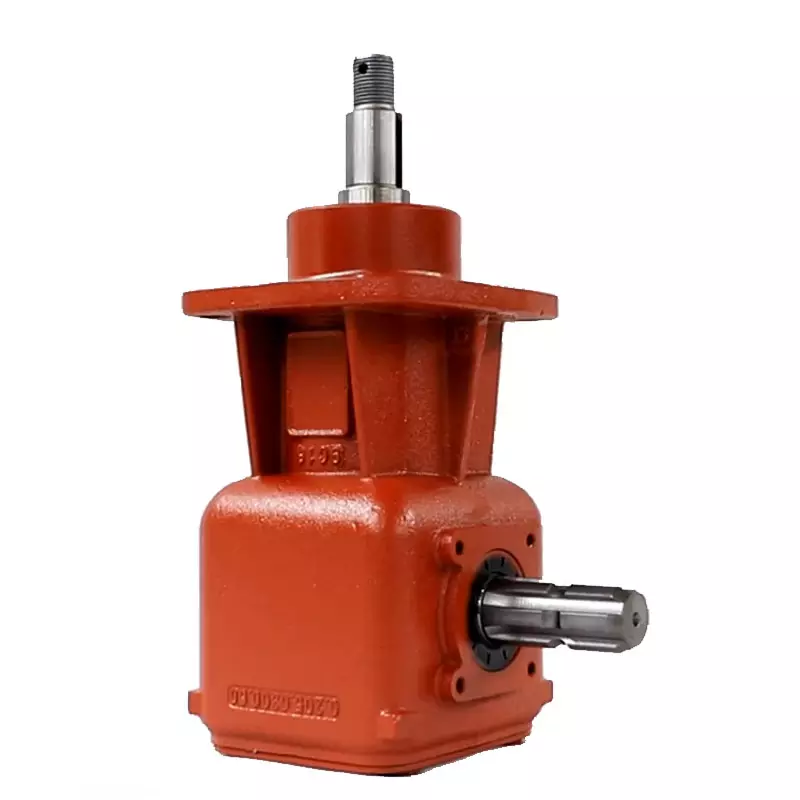
Complement your Rotary Tiller PTO shaft with these products from our range:
Let’s Work Together – Rotary Tiller PTO Shaft Supply
We supply PTO shafts for rotary tiller applications to individual farmers, agricultural dealers, service workshops, and OEM manufacturers across Australia and internationally. Bulk pricing, custom specifications, and private-label options are available for qualified partners.
Bereit loszulegen? Wenden Sie sich an unser Vertriebs- und Entwicklungsteam, um eine individuelle Beratung zu erhalten.