Description
Friction Torque Limiter for PTO Shaft | Slip Clutch for Agricultural Driveline Protection
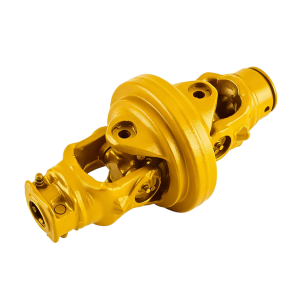
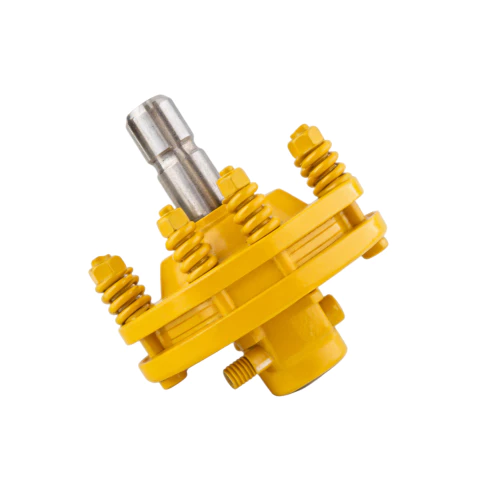
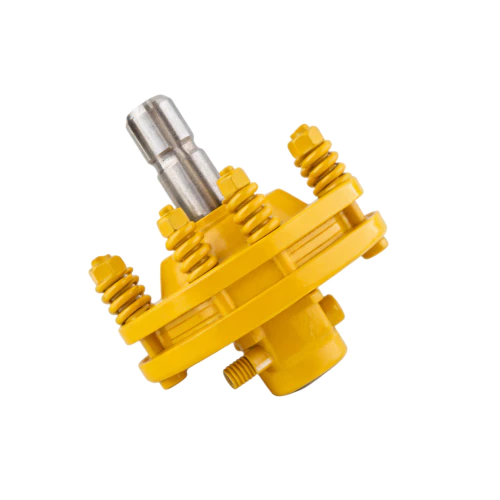
The Friction Torque Limiter — variously called a friction slip clutch, disc-type safety coupling, adjustable torque limiter, or spring-loaded friction clutch for PTO — is the most versatile class of overload protection available for agricultural PTO drive shafts. By sandwiching one or more friction discs between a spring-loaded pressure plate and a hub, the device transmits torque reliably under normal conditions but slips progressively when the load exceeds the spring preload setting. The result is smooth, continuous overload protection that shields gearboxes, universal joints, and implements from damage — all without consuming any sacrificial parts. Our friction torque limiter catalog is the widest in the industry, covering torque ratings from 800 Nm to 3,000 Nm across dozens of series and sub-variants to fit every implement size and PTO configuration.
Product Series Overview
Our friction torque limiter range includes multiple design families optimized for different installation configurations and torque/speed requirements:
| Design Family | Output Type | Torque Range | Disc Sizes | Key Feature |
|---|---|---|---|---|
| FF0 – FF2 Series | Yoke | 800 – 1800 Nm | ⌀120 – ⌀160 | Standard yoke-output, bolt & spring clamping |
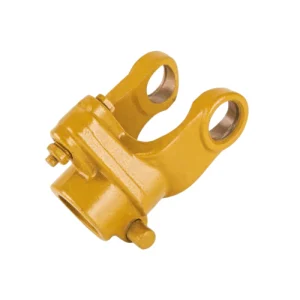
| FFV1 – FFV2 Series | Yoke | 900 – 1800 Nm | ⌀140 – ⌀160 | Compact flanged-yoke variant with complete bolt |
| FF3 – FF4 Series | Yoke | 2000 – 3000 Nm | ⌀140 – ⌀160 | Heavy-duty, intermediate hub design |
| FFV3 – FFV4 Series | Yoke | 2000 – 2800 Nm | ⌀140 – ⌀160 | Heavy-duty compact variant |
| FFT0 – FFT2 Series | Yoke | 800 – 1200 Nm | ⌀120 – ⌀160 | Belleville spring design for consistent torque |
| FFVT1 – FFVT2 Series | Yoke | 900 – 1200 Nm | ⌀140 – ⌀160 | Belleville + compact flanged yoke |
| FFT4 / FFVT4 Series | Yoke | 1600 – 2000 Nm | ⌀160 | Belleville heavy-duty with hexagon board |
| FFS / FFVS / FFST / FFSVT Series | Splined shaft | 900 – 2500 Nm | ⌀140 – ⌀160 | Splined shaft output (F/M) |
| FCS Series | Flanged spline | 800 – 1500 Nm | ⌀125 – ⌀163 | Compact flanged-spline design with 2 friction discs |
Available splines: 1 3/8" Z6, 1 3/8" Z21, 1 3/4" Z6, 1 3/4" Z20 — covering all global 540 RPM and 1000 RPM PTO standards.
Highlighted Technical Data
| Sample Series | Torque (Nm) | Disc | Spline | A (mm) | B (mm) | C (mm) |
|---|---|---|---|---|---|---|
| 4FF0 / 5FF0 | 800 / 1000 | ⌀120 | 1 3/8"Z6 | 135 / 137 | 29 | ⌀160 |
| 4FF1 – 6FF1 | 1200 | ⌀140 | Z6 / Z21 | 150 – 160 | 29 | ⌀180 |
| 4FF2 – 8FF2 | 1500 – 1800 | ⌀160 | Z6 / Z21 / 1 3/4" | 150 – 169 | 29 | ⌀200 |
| 5FF3 – 6FF3 | 2000 | ⌀140 | Z6 / Z21 | 168 – 176 | 29 | ⌀180 |
| 5FF4 – 42FF4 | 2000 – 3000 | ⌀160 | Z6 / Z21 / 1 3/4" | 168 – 190 | 29 | ⌀200 |
| FCS165 / FCS165D | 800 | ⌀125 | Z6 / Z6 | 140 | 20 | ⌀165 |
| FCS203 / FCS203D | 1500 | ⌀163 | Z6 / Z21 | 155.5 | 30 | ⌀203 |
Competitive Advantages
Unlike shear bolts that break or ratchets that click, friction clutches provide smooth, progressive slip that dissipates energy gradually without interrupting the workflow.
Friction linings and discs are designed for thousands of slip cycles before wear replacement is needed — far more economical than shear bolt inventories.
Over 200 model variants spanning FF, FFV, FFT, FFVT, FFS, FFVS, FFST, FFSVT, and FCS families ensure a precise fit for any implement.
Spring preload can be adjusted (on bolt-spring models) to fine-tune the slip torque to your specific application requirements.
Up to 3,000 Nm with multi-disc configurations handles the most demanding agricultural and industrial PTO applications.
Yoke, flanged yoke, splined shaft, and flanged spline outputs provide unmatched flexibility for OEM and aftermarket integration.
Operational Principle
A stack of friction discs (or linings) is sandwiched between the hub and the pressure plate inside the housing. A set of Belleville springs or coil springs and bolts applies a calibrated clamping force to maintain frictional contact. Under normal torque, static friction locks the disc stack and transmits full rotational power. When the applied torque surpasses the friction force (determined by spring preload, disc area, and friction coefficient), the discs begin to slip, converting excess mechanical energy into heat. This controlled energy dissipation protects the entire driveline. The clutch re-engages automatically once the overload condition passes, requiring no operator intervention.
Application Scenarios
Stone strikes generate sharp torque peaks; the friction clutch absorbs these spikes smoothly and re-engages without any bolt change.
Continuous contact with variable-density vegetation creates fluctuating loads. Friction slip handles these variations seamlessly.
Overloaded hoppers or damp grain can stall the auger; friction protection lets the clutch slip until the blockage clears.
Thick slurry creates high starting torque; the friction disc absorbs the initial surge and delivers power progressively.
Limiter Technology Comparison
| Параметр | Ball Detent | Friction Disc | Shear Pin | Magnetic Hysteresis |
|---|---|---|---|---|
| Torque Range | 570 – 3200 Nm | 800 – 3000 Nm | 570 – 4500 Nm | 0.1 – 50 Nm (low torque) |
| Speed Range | 540 / 1000 RPM | 540 / 1000 RPM | 540 / 1000 RPM | Up to 6000 RPM |
| Reset Method | Auto pop-back | Continuous slip / auto | Manual bolt swap | Continuous / contactless |
| Best Application | Moderate intermittent shock | Varied load / continuous | Catastrophic single event | Precision lab / packaging |
Installation Instructions
- Verify the spline profile, friction disc size, and overall dimensions against your implement specifications.
- Mount the hub onto the PTO shaft using the taper pin (with nut where applicable).
- Assemble the friction disc stack, pressure plate, and spring elements per the exploded diagram.
- Tighten clamping bolts evenly in a star pattern to the specified torque value.
- Attach the yoke (or splined shaft) to the implement. For FCS flanged models, bolt the flange to the implement housing.
- Grease through the nipple and test by hand — the output should turn freely when force exceeds the setting.
Maintenance Note: Inspect friction linings every season. Replace when wear reduces lining thickness by more than 50 %. Check spring bolt tension annually.
Selection Guide
Start by establishing the maximum continuous torque of your implement. Select a friction limiter with a rated torque 20–30 % above this value. Choose the appropriate design family: FF/FFV for standard bolt-spring models, FFT/FFVT for Belleville-spring models (more consistent torque over wear life), FFS/FFVS/FFST/FFSVT for splined-shaft outputs, or FCS for compact flanged-spline applications. Verify the disc diameter matches the available radial space. Finally, confirm the spline type (Z6, Z21, 1 3/4"Z6, Z20) matches your PTO output. Our technical team is available to assist with non-standard configurations.
Quality & Certification
All friction torque limiters are produced under ISO 9001:2015 quality management with CE marking for European compliance. Friction linings are tested to EN 1398 standards for heat resistance, wear rate, and coefficient stability. Every unit undergoes slip-torque validation on our dedicated dynamometer test rig. Our 12-month warranty covers manufacturing defects, and replacement friction kits are stocked for worldwide express delivery.
FAQ
How long do friction linings last?
Under normal use with occasional slip events, linings typically last 3–5 seasons. Continuous heavy slipping accelerates wear — monitor lining thickness each season and replace when worn to 50 % of original.
Can I increase the slip torque by tightening the bolts further?
Within the designed adjustment range, yes. However, exceeding the maximum recommended preload can overstress the springs and damage the pressure plate. Stay within manufacturer specifications.
What is the difference between FF and FFT series?
FF models use coil springs and bolts; FFT models use Belleville (disc) springs. Belleville springs maintain more consistent torque as the linings wear because their force-displacement curve is flatter. Choose FFT for applications where consistent trip torque is critical.
What is the “V” designation?
The “V” indicates a compact variant with a flanged yoke output — shorter overall length and direct mounting capability. FFV, FFVT, FFVS, FFSVT all follow this convention.
Is the FCS series compatible with standard PTO shafts?
FCS series features a dual-spline design (female and male) with a flanged housing, intended for direct in-line installation between two PTO shaft sections. It is especially popular for compact implement drive trains.
International Customer Experiences
“We run the 7FF4 series on our 3-metre flail mulcher. The friction slip is incredibly smooth and the linings have lasted three full seasons so far.”
“The FFV2 fits perfectly on our olive harvest shaker. Compact, reliable, and easy to adjust for different tree sizes.”
“Switched our entire fleet from shear bolts to friction clutches. Zero downtime from bolt changes and the implements are better protected.”
“The FCS203 is perfect for our combine header drive. Compact size, strong torque, excellent quality.”
“Running FF4 clutches across our cattle ranch equipment. Grain augers, feed mixers, manure spreaders — they protect everything.”
Complementary PTO Components
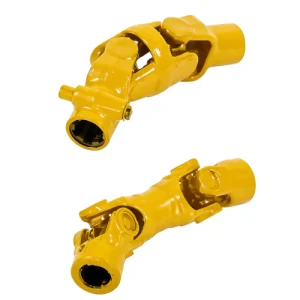
Pair friction torque limiters with our complete PTO shaft assemblies, overrunning clutches, wide-angle joints, SD-double joints, yokes, safety shields, cross journals, slip profiles, and adapters. We also supply agricultural gearboxes for right-angle and in-line drive configurations.