
PTO Shaft for Potato Planter – Heavy-Duty Power Transmission Solutions
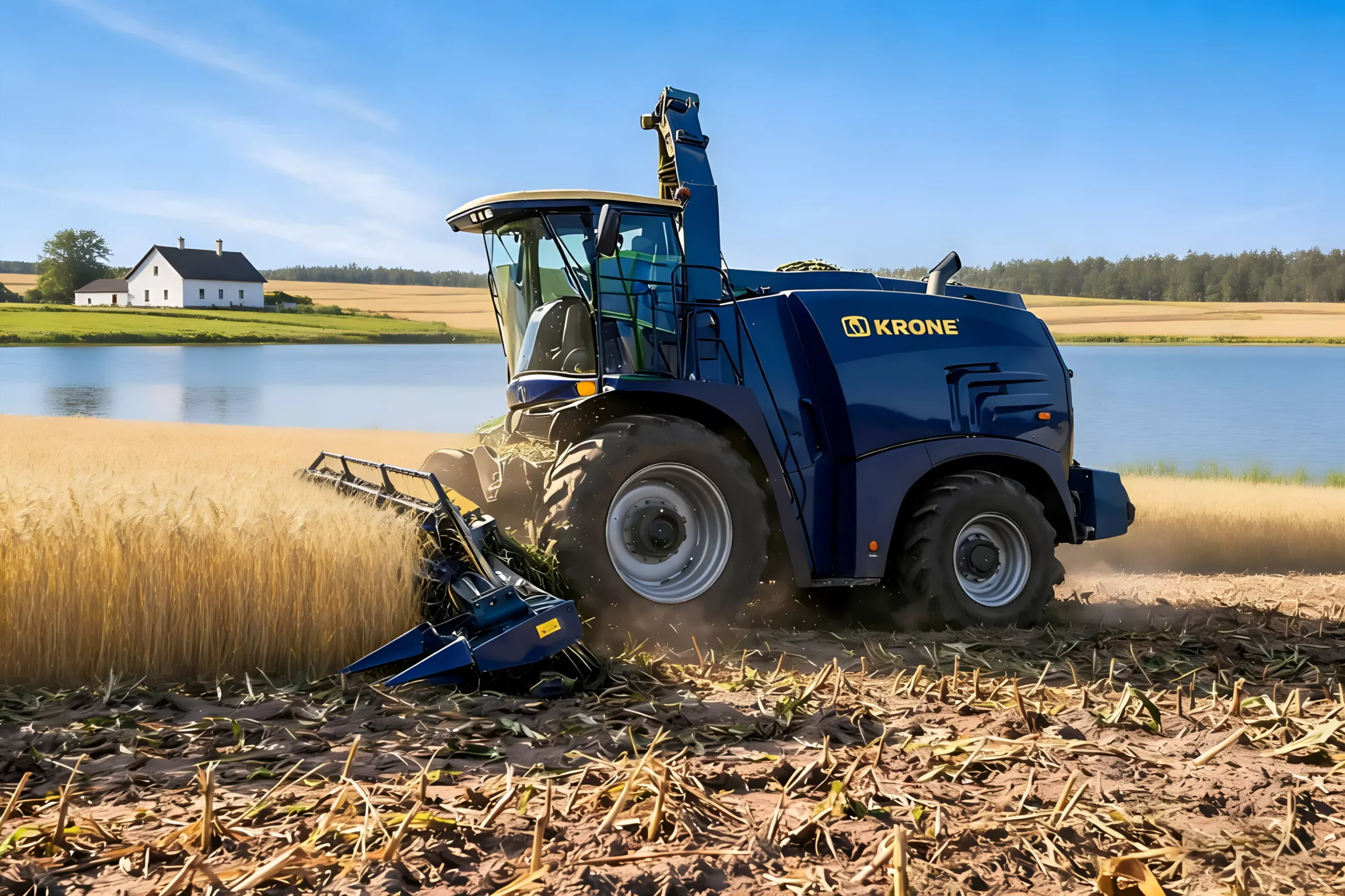
Operating a potato planter demands reliable, uninterrupted rotational power delivered from the tractor’s power take-off (PTO) to the implement. Our PTO shaft for potato planter is precision-engineered to handle the unique torque loads, speed requirements, and environmental stresses of potato tuber planting. Whether you manage broadacre farming or intensive horticulture, this PTO drive shaft ensures peak performance season after season.
Technical Specifications – Potato Planter PTO Shaft
| Parametro | Specifiche / Gamma personalizzabile |
|---|---|
| Applicazione | Potato Planter |
| Potenza consigliata del trattore | 30–90 HP |
| Velocità presa di forza | 540 rpm (Economy) |
| Coppia massima continua | 200–600 Nm |
| Capacità di coppia massima | 900 Nm |
| Serie di alberi | T2 / L2 (Light-medium duty) / T3 / L3 (Medium duty) / T4 / L4 (Medium-heavy duty) |
| Profilo del tubo | Lemon profile or Splined profile |
| Lubrificante consigliato | EP2 lithium |
| Lunghezza chiusa (Lmin) | 700–1100 mm (customisable) |
| Equilibrio dinamico | Factory balanced |
| Angolo operativo massimo | 80° |
| Tube Wall Thickness | 4.0 mm |
| Overload Protection Options | Cam-release clutch / Friction clutch torque limiter / Ratchet torque limiter |
| Opzioni di attacco per trattore | Splined yoke (1-3/8″ 21-spline) / Plain bore yoke |
| Guard Colour | Green (RAL 6018) |
| Operating Temperature Range | -25°C to +80°C |
| Materiale di protezione di sicurezza | HDPE (high-density polyethylene) / ABS plastic |
| U-Joint Bearing Type | Greased needle roller |
| Peso di assemblaggio | 13–31 kg (varies by length) |
| Materiale del giogo | Forged carbon steel (C45) |
How a PTO Shaft Works on a Potato Planter
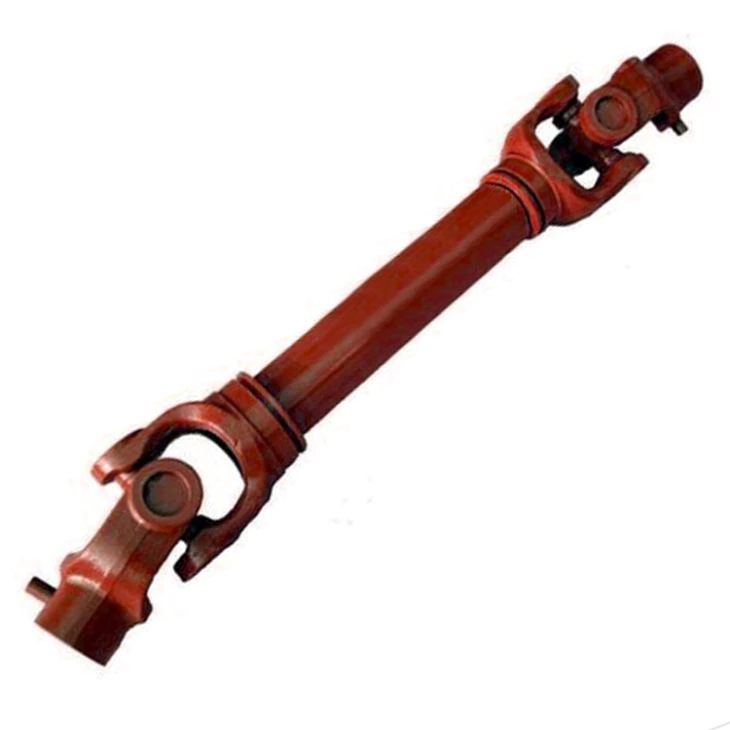
The PTO shaft transmits rotational energy from the tractor’s rear PTO stub to the input shaft of the potato planter. The assembly consists of two yokes connected by a telescoping profile tube, with universal joints (U-joints) at each end allowing angular misalignment as the tractor and implement articulate over uneven ground.
During potato tuber planting, the tractor PTO stub rotates at a standardised speed. This rotation passes through the first U-joint, travels along the profile tube (which telescopes to accommodate changes in distance), and exits through the second U-joint into the implement gearbox. A safety guard encloses the entire rotating assembly to prevent entanglement.
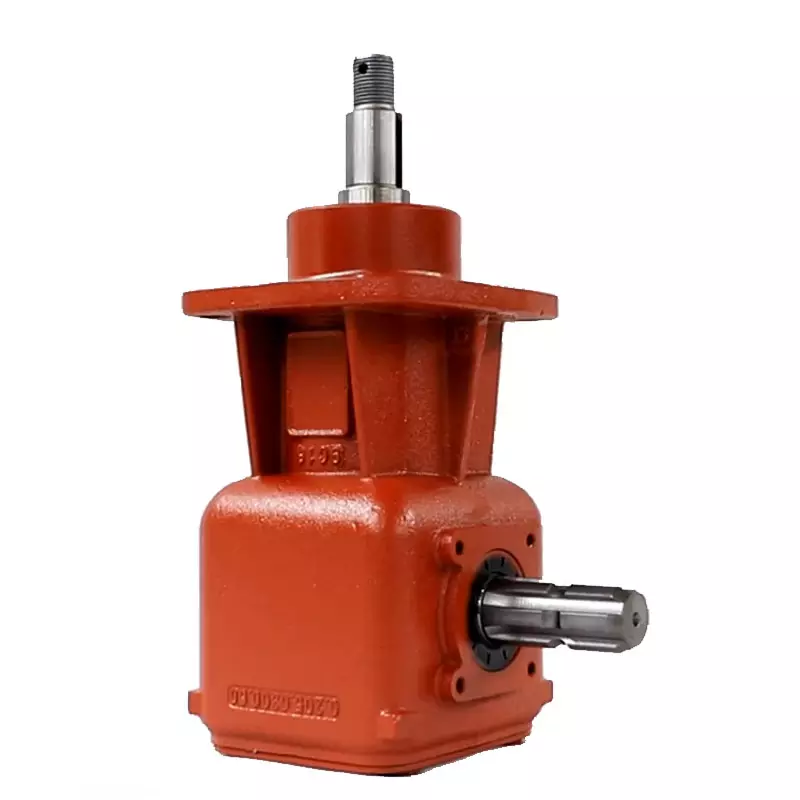
On the potato planter specifically, the PTO shaft drives the main gearbox, which in turn powers the working elements. Overload protection—typically a shear bolt or friction clutch—is integrated at the implement-end yoke to safeguard the driveline against sudden blockages or shock loads.
Core Advantages of Our PTO Shaft for Potato Planter
⚙ Heat-Treated Components
Every yoke and U-joint cross in our potato planter PTO shaft is induction-hardened and tempered, delivering superior fatigue resistance compared to standard cast components.
⚖ Precision-Balanced Assembly
Computer-balanced shaft assemblies minimise vibration, reducing wear on tractor and implement bearings and extending overall driveline life.
🔒 Integrated Overload Protection
Factory-fitted torque limiters protect your investment by automatically disengaging under shock loads, preventing costly repairs to gearboxes and drivelines.
🔧 Telescoping Design
Profile tubes telescope smoothly to accommodate field undulations and turning manoeuvres, ensuring consistent power delivery during operation.
🛡 Full Safety Guarding
CE-compliant safety shields with bearing-mounted rotation enclose the entire shaft, meeting Australian WHS requirements and protecting operators.
🏆 Extended Warranty
We stand behind our products with an industry-leading warranty, reflecting our confidence in the durability and reliability of every PTO shaft we supply.
Cross-Compatibility & Replacement Fit Guide
This PTO shaft is engineered to replace OEM and aftermarket drivelines fitted to potato planter equipment from AB Shaft, Walterscheid, Eurocardo, MecLine, Shafto, Bondioli e Pavesi, among others. Our technical team can cross-reference your existing part number to ensure a precise match.
⚠ The use of brand names above is for the sole purpose of assisting customers in identifying compatible replacement parts. No affiliation with or endorsement by any listed brand is implied. All trademarks belong to their respective owners.
Individual Components & Spares
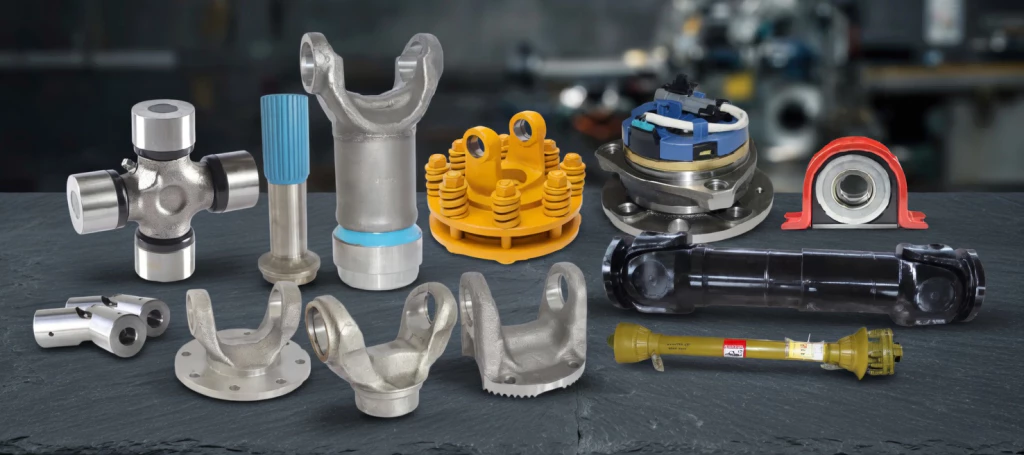
We supply every PTO shaft component separately—cross kits, yoke assemblies, inner and outer tubes, guard sets, clutch assemblies, shear pins, and mounting hardware—so you can rebuild or reconfigure your shaft as needed without purchasing a full replacement.
Regulatory Compliance & Regional Information
Work Health & Safety (WHS)
In Australia, PTO shaft guarding is mandated under the model Work Health and Safety Regulations. Every PTO shaft we supply for potato planter use includes a full-length safety guard assembly, meeting the requirements outlined in the Managing the Risks of Plant in the Workplace Code of Practice.
International Standards
Our products are manufactured to ISO 5673-1 and ISO 5673-2 specifications for PTO driveline dimensions and guarding. Universal joints conform to DIN 71752 for cross and bearing cup tolerances.
Import & Customs
PTO shafts and components are classified under Australian Customs Tariff heading 8483 (transmission shafts and cranks; bearing housings; gears and gearing). Duty rates and GST apply at the time of import. We handle all customs documentation for Australian deliveries.

Quick Selection Guide for Potato Planter PTO Shafts
Use the table below to determine the correct PTO shaft specification for your potato planter. Measure your existing shaft or consult your implement manual before ordering.
| Parametro | Cosa controllare | Typical Range for Potato Planter |
|---|---|---|
| Potenza del trattore | Controllare la targhetta identificativa del trattore o il manuale. | 30–90 HP |
| Velocità presa di forza | Impostazione della presa di forza del trattore e requisiti dell'attrezzo | 540 o 1000 giri al minuto |
| Dimensioni della scanalatura della presa di forza | Contare le scanalature sul perno della presa di forza del trattore | 1-3/8" 6 scanalature o 1-3/4" 6 scanalature |
| Lunghezza dell'albero a vuoto | Misurare la presa di forza del trattore per implementare l'input | 700–1100 mm |
| Coppia richiesta | Consultare il manuale dell'attrezzo o calcolare in base a potenza/velocità | 200–600 Nm |
| Serie consigliate | Corrispondere al requisito di coppia | T2 / L2 (Light-medium duty) / T3 / L3 (Medium duty) / T4 / L4 (Medium-heavy duty) |
| Protezione da sovraccarico | Valutare il rischio di blocco improvviso | Frizione o bullone di sicurezza |
| Implementare il tipo di giogo | Adattare per implementare il profilo dell'albero di ingresso | A sgancio rapido o scanalato |
📌 Non sai quale albero scegliere? Contatta il nostro team tecnico Forniscici il modello del tuo trattore e i dettagli dell'attrezzo per ricevere un consiglio gratuito.
Installation Guide – PTO Shaft on Potato Planter
⚠ Attenzione: Spegnere sempre il motore del trattore, disinnestare la presa di forza e attendere che tutte le parti rotanti si fermino completamente prima di iniziare l'installazione. Seguire le istruzioni di sicurezza del produttore del trattore.
Fase 1: Ispezione preliminare all'installazione
Unpack the PTO shaft and inspect all components for shipping damage. Verify that the yoke splines, U-joints, profile tubes, and safety guards are in perfect condition. Confirm the shaft series and length match your potato planter requirements.
Passaggio 2: Impostare la lunghezza corretta dell'albero
Park the tractor with the potato planter in its normal working position. Measure the distance from the tractor PTO stub face to the implement input shaft face. Adjust the telescoping tubes so that the shaft closed length is approximately 10–15 mm shorter than this measured distance to allow for suspension travel.
Fase 3: Collegare il giunto terminale del trattore
Far scorrere il giunto lato trattore sull'albero cardanico della presa di forza. Assicurarsi che le scanalature si innestino completamente e che il meccanismo di bloccaggio (perno a pressione o collare) scatti in posizione. Verificare che non vi sia un gioco radiale eccessivo.
Passaggio 4: Collegare il giogo dell'estremità dell'attrezzo
Align the implement-end yoke with the potato planter’s input shaft. Slide the yoke onto the splines or into the keyway and secure with the appropriate locking mechanism. If a torque limiter is present, ensure it is correctly oriented per the manufacturer’s markings.
Fase 5: Installare le protezioni di sicurezza
Infilare le due metà della protezione sull'albero e collegarle utilizzando le clip in dotazione. Fissare le catene di sicurezza della protezione: una al timone del trattore o a un punto fisso, l'altra al telaio dell'attrezzo. Le protezioni devono poter ruotare liberamente e non devono mai essere fissate a un componente rotante.
Fase 6: Verifica finale e prova di funzionamento
Verificare che tutti i collegamenti siano ben saldi. Avviare il motore del trattore e innestare la presa di forza al minimo. Osservare l'albero per verificare che ruoti senza intoppi, che non presenti vibrazioni o rumori anomali. Aumentare gradualmente la velocità fino al regime di esercizio. Ricontrollare tutti i dispositivi di fissaggio dopo la prima ora di funzionamento.

PTO Shaft Troubleshooting Guide for Potato Planter
| Sintomo | Possibile causa | Azione consigliata |
|---|---|---|
| Il bullone di sicurezza si rompe ripetutamente | Ostruzione non rimossa; bullone di grado errato utilizzato; albero sottodimensionato | Eliminare la fonte dell'ostruzione; utilizzare solo bulloni del grado specificato; valutare l'aggiornamento alla serie di alberi successiva |
| La frizione di sovraccarico slitta sotto carico normale | Dischi della frizione usurati o contaminati; coppia di serraggio errata | Regolare la coppia di serraggio della frizione; sostituire i dischi della frizione se usurati o contaminati dall'olio. |
| Rumore di clic o di colpi a bassa velocità | Cuscinetti a rullini del giunto cardanico usurati; forcella allentata sul perno della presa di forza | Sostituire il gruppo giunto cardanico; controllare l'usura delle scanalature e il meccanismo di bloccaggio della forcella. |
| Velocità di implementazione incoerente | L'albero della presa di forza slitta; le scanalature sono usurate; la frizione è parzialmente innestata | Verificare l'innesto del giunto; sostituire il giunto se le scanalature sono usurate; regolare o sostituire il gruppo frizione. |
| Heat build-up at U-joint | Insufficient lubrication; excessive operating angle; bearing failure | Grease U-joints immediately; reduce operating angle; replace cross kit if bearings are damaged |
| Shaft will not telescope smoothly | Corrosion or debris in profile tubes; insufficient lubrication | Clean and grease profile tubes; replace if scoring is visible |
| Un insolito rumore di lamento o stridio | Guasto al cuscinetto di ingresso del cambio; albero disallineato | Ispezionare il riduttore dell'attrezzo; riallineare il trattore e l'attrezzo; controllare la sovrapposizione della lunghezza dell'albero |
| L'albero della presa di forza si disconnette durante il funzionamento. | Collare di bloccaggio usurato; scanalatura di ritegno danneggiata sul perno della presa di forza | Sostituire il giunto a sgancio rapido; ispezionare e riparare la scanalatura del perno della presa di forza se usurata. |
Case Studies – PTO Shaft for Potato Planter in Australia
Appunti dal campo raccolti dal nostro team di ingegneri e venditori in tutta l'Australia:
📍 Emerald, QLD – Phil Bennett
Scopo: Upgraded from a light-duty shaft to a heavy-duty series for commercial-scale potato tuber planting
Feedback: "Il nostro meccanico è rimasto impressionato dalla precisione delle scanalature e dalla qualità dei cuscinetti a rullini. Ha detto che è il miglior albero di trasmissione aftermarket che abbia montato in 20 anni."
📍 Mackay, QLD – Peter Johnson
Scopo: Needed a direct-fit replacement after the original shaft suffered a U-joint failure mid-season
Feedback: “Fitted perfectly to my potato planter with zero modification. The quality is noticeably better than the OEM shaft it replaced. I’ll be ordering more for my other implements.”
📍 Port Augusta, SA – Stuart Palmer
Scopo: Outfitted a newly purchased second-hand potato planter with a reliable aftermarket PTO shaft
Feedback: “Le protezioni di sicurezza sono robuste e ruotano liberamente. Soddisfano effettivamente i requisiti in materia di salute e sicurezza sul lavoro, a differenza di quelle economiche che si trovano da altri fornitori.”
📍 Carnarvon, WA – Rick Dawson
Scopo: Replaced a corroded shaft that had been exposed to chemical spray residues
Feedback: “We swapped out our old economy shaft for this one and noticed an immediate reduction in vibration. The tractor runs quieter and the implement operates smoother.”
📍 Griffith, NSW – Dean Hartley
Scopo: Era necessario un albero di lunghezza personalizzata per una distanza non standard tra trattore e attrezzo.
Feedback: "Ho ordinato un kit di ricambio per la croce sei mesi dopo ed è arrivato entro 48 ore. Ottimo prodotto, ottimo servizio, ottimo supporto."
Frequently Asked Questions – PTO Shaft for Potato Planter
❓ What causes premature U-joint failure?
Common causes include insufficient lubrication, excessive operating angles (over 25°), running at speeds higher than rated, misalignment between tractor and implement, and lack of regular inspection. Following the recommended maintenance schedule significantly extends U-joint life.
❓ Can the shaft be shortened to fit my setup?
Yes. The telescoping profile tubes can be cut to a shorter length using an angle grinder or chop saw. Ensure a minimum of 1/3 overlap remains between the inner and outer tubes after cutting. Deburr all cut edges before reassembly.
❓ Gli alberi cardanici della tua presa di forza sono bilanciati?
Sì. Tutti i nostri alberi cardanici per presa di forza vengono bilanciati dinamicamente durante la produzione. Ciò riduce le vibrazioni, prolunga la durata dei cuscinetti e garantisce un funzionamento più fluido rispetto alle alternative aftermarket non bilanciate.
❓ Qual è la differenza tra un bullone di sicurezza e una frizione a disco?
Un bullone di sicurezza è un perno sacrificale che si rompe quando la coppia supera la sua capacità nominale. È economico ma richiede la sostituzione manuale dopo ogni evento. Una frizione slitta in caso di sovraccarico e si innesta automaticamente quando il sovraccarico scompare, offrendo un funzionamento ininterrotto in applicazioni soggette a frequenti carichi d'urto.
❓ Effettuate spedizioni nelle zone regionali e remote dell'Australia?
Certamente. Spediamo in tutti i codici postali australiani tramite i principali corrieri. Le zone regionali e remote potrebbero avere tempi di consegna leggermente più lunghi, ma collaboriamo con diversi corrieri per garantire consegne affidabili in tutto il paese.
❓ Will this shaft fit my tractor and potato planter?
Our PTO shafts are available with all standard yoke types and spline sizes (1-3/8" 6-spline, 1-3/4" 6-spline, 1-3/4" 20-spline, and more). Provide your tractor model and potato planter make/model, and our team will confirm compatibility before dispatch.
❓ How often should I grease the PTO shaft?
Grease all U-joint nipples every 8–10 hours of operation, or at the start of each working day. Grease the telescoping profile tubes at the same interval. Use EP2 lithium-complex grease or as recommended in your product manual.
❓ Come si misura la lunghezza corretta da chiuso?
Agganciare l'attrezzo al trattore nella sua normale posizione di lavoro. Misurare la distanza in linea retta dalla faccia del perno della presa di forza del trattore alla faccia dell'albero di ingresso dell'attrezzo. La lunghezza dell'albero a riposo dovrebbe essere di circa 10-15 mm inferiore a questa misura.
Prodotti correlati
Complement your Potato Planter PTO shaft with these products from our range:
Let’s Work Together – Potato Planter PTO Shaft Supply
We supply PTO shafts for potato planter applications to individual farmers, agricultural dealers, service workshops, and OEM manufacturers across Australia and internationally. Bulk pricing, custom specifications, and private-label options are available for qualified partners.
Ready to get started? Reach out to our sales and engineering team for personalised service.